yellow condition
sticky-thick-oil
Seasoning turned out sticky after baking
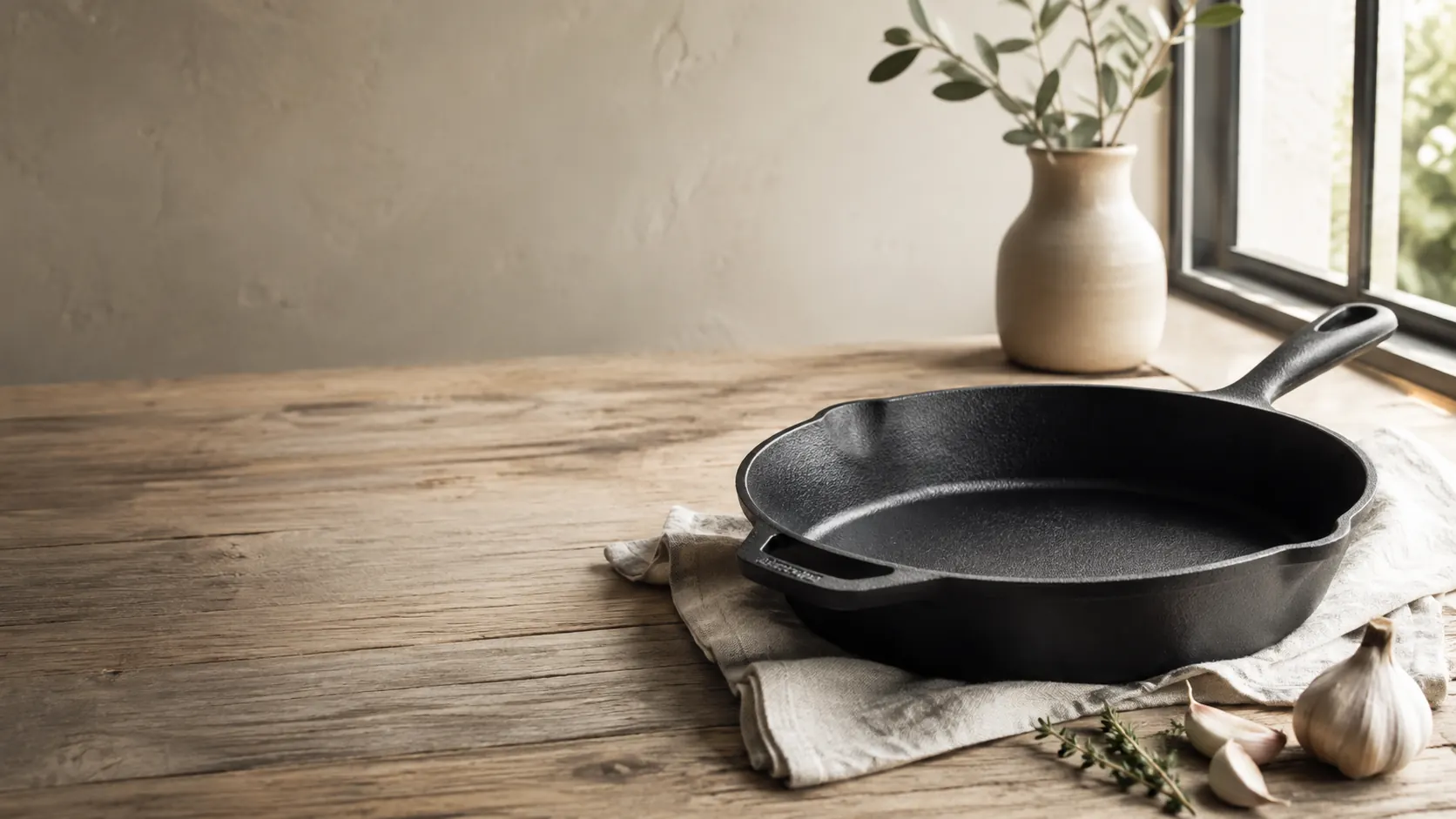
Applies to: Bare cast iron skillet; new or freshly stripped pan; oil applied before oven seasoning
yellow
Possible causes (ranked)
- Oil layer was too thick — excess oil polymerizes into a tacky, gummy film instead of a hard layer
- Oven temperature was below the oil’s polymerization range
- Pan was cooled before the oil fully polymerized
Next step — change one variable
Change one variable: strip nothing yet. Wipe the pan with a dry cloth or paper towel, then reheat in the oven at the seasoning temperature for 30–60 minutes to cure the existing layer before adding another coat.
Stop condition
Stop if the pan smells strongly of burning oil or produces heavy smoke for more than a few minutes; open ventilation and let the pan cool before continuing.
Method
Wipe away loose tacky oil; reheat at seasoning temperature; apply future coats in the thinnest possible layer, then buff off as much oil as remains visible before baking.
Unknown fields
- Exact temperature used in your oven (must be verified with your own oven thermometer)
- Which oil and its smoke point
- Whether the pan was enameled (enameled cookware must never be oven-seasoned this way)
Sources
Limited factual extraction with attribution; no reproduction of proprietary diagrams.
yellow condition
rust-light
Light surface rust after washing or storage
Applies to: Bare cast iron; rust visible as orange-brown powder or patches on cooking surface
yellow
Possible causes (ranked)
- Pan was left damp or stored without drying
- Seasoning is thin or was stripped locally by acidic food
- Pan was washed with soap and not re-oiled
Next step — change one variable
Change one variable: scrub the rusted areas with a stiff brush or fine steel wool and warm water until the orange residue is gone, dry thoroughly on the stovetop, then apply one thin seasoning coat.
Stop condition
Stop if scrubbing reveals deep pits, flaking metal, or a crack; deep pitting or cracks require a separate safety assessment before use.
Method
Warm water + stiff brush or fine steel wool; dry on low heat; thin oil coat; heat at seasoning temperature for one hour.
Unknown fields
- Age and prior care of the pan
- Whether rust is superficial or pit-forming (inspect after scrubbing)
- If the pan has been in contact with unknown chemicals
Sources
Limited factual extraction with attribution; no reproduction of proprietary diagrams.
red condition
rust-heavy
Heavy rust covering most of the cooking surface
Applies to: Bare cast iron; thick orange-brown or flaky rust, possibly on a vintage or thrifted pan
red
Possible causes (ranked)
- Prolonged exposure to moisture without protection
- Old seasoning fully worn or removed
- Storage in a damp environment
Next step — change one variable
Change one variable: decide strip vs spot-clean. If rust is thick and flaky, strip the pan completely (lye bath or oven self-clean cycle per manufacturer guidance — never electrolysis in a food prep area without training), then restore seasoning from bare metal.
Stop condition
Stop immediately if you see cracks, warping, or deep pitting after stripping. Do not use a cracked or severely warped pan; do not cook with a pan whose condition is unknown.
Method
Full strip (lye bath or oven self-clean) → neutralize/rinse → dry → multiple thin seasoning coats. Follow the manufacturer’s own restoration instructions for your pan brand.
Unknown fields
- If the pan is enameled (never use lye or oven self-clean on enameled cookware)
- If the pan contains unknown coatings or was used with unknown chemicals
- Exact alloy and age of the pan
Sources
Limited factual extraction with attribution; no reproduction of proprietary diagrams.
yellow condition
flaking-seasoning
Seasoning flakes or chips off in patches
Applies to: Bare cast iron; black seasoning visible as flaking patches exposing gray metal
yellow
Possible causes (ranked)
- Multiple thick oil layers that polymerize and then detach
- Thermal shock (sudden temperature change)
- Metal surface not clean before seasoning
Next step — change one variable
Change one variable: do not keep piling oil on. Wipe away loose flakes, clean the exposed metal, then apply very thin coats and heat each coat until it cures before adding the next.
Stop condition
Stop if flaking exposes a cracked or deeply pitted surface; assess safety before further use. If the flaking is from an enamel coating (glass-like chips), stop and replace — enameled cookware is not restored by oil seasoning.
Method
Remove loose flakes; thin-coat method; each coat fully cured before next; several coats may be needed.
Unknown fields
- Whether pan is enameled (glass chips are not seasoning)
- How many seasoning coats and temperatures were used
- If the pan was subjected to thermal shock
Sources
Limited factual extraction with attribution; no reproduction of proprietary diagrams.
yellow condition
pitting-safety
Small pits or rust craters on the cooking surface
Applies to: Bare cast iron; pits visible after rust removal; no cracks
yellow
Possible causes (ranked)
- Rust that etched the surface before removal
- Repeated acid contact on bare metal
- Aggressive scrubbing that removed protective layers
Next step — change one variable
Change one variable: after cleaning rust, season the pan and cook with it. Shallow pits often fill with seasoning over repeated use. Do not sand or grind the surface unless you understand the impact on the pan’s structure.
Stop condition
Stop and do not use if you find a crack, a raised lip around a pit, or deep pitting that exposes metal thin enough to flex; obtain a professional assessment or retire the pan.
Method
Clean → season with thin coats → normal cooking to rebuild a smooth layer; monitor the pits over several uses.
Unknown fields
- Depth and extent of pitting (inspect carefully)
- Whether the pan has cracks (cracks are a separate, red condition)
- Manufacturer guidance specific to your pan model
Sources
Limited factual extraction with attribution; no reproduction of proprietary diagrams.
yellow condition
smoking-too-hot
Pan smokes heavily during preheat or cooking
Applies to: Bare cast iron; smoke appears before food is added or during high-heat cooking
yellow
Possible causes (ranked)
- Pan temperature above the smoke point of the oil or fat in use
- Residual oil or food particles burning on the surface
- Seasoning layer overheated beyond its polymerization range
Next step — change one variable
Change one variable: reduce the burner setting and let the pan stabilize. Preheat on medium-low, not high, and use fats with a smoke point that matches the cooking method.
Stop condition
Stop if smoke is continuous and heavy for several minutes, or if the pan is left unattended at high heat; move the pan off the burner, ventilate, and let it cool before cleaning.
Method
Medium-low preheat; match oil to temperature; wipe surface of residual oil before heating.
Unknown fields
- Your cooktop’s actual output at each setting
- The smoke point of the specific oil/fat in use
- Whether seasoning was recently applied with excess oil
Sources
Limited factual extraction with attribution; no reproduction of proprietary diagrams.
yellow condition
sticky-first-season
Brand-new pan is sticky after factory seasoning or first season
Applies to: New bare cast iron skillet; sticky feel on the surface out of the box or after first oven season
yellow
Possible causes (ranked)
- Excess factory oil not fully cured
- Seasoning oil applied too thick on first attempt
- Low smoke-point oil used for seasoning
Next step — change one variable
Change one variable: wash the pan with warm soapy water and a stiff brush, dry it, then apply a single very thin layer of a high-smoke-point oil and bake it at the oil’s seasoning temperature.
Stop condition
Stop if the pan smokes continuously or if the surface remains tacky after re-curing; reassess the oil and temperature before repeating.
Method
Warm soapy wash → dry → thin high-smoke-point oil → bake at seasoning temperature → cool slowly.
Unknown fields
- Exact factory seasoning used by the manufacturer (differs by brand)
- Whether your oven temperature is accurate
- Which oil you used and its smoke point
Sources
Limited factual extraction with attribution; no reproduction of proprietary diagrams.
yellow condition
food-sticking
Food sticks even on a seasoned pan
Applies to: Bare cast iron with established seasoning; food sticks during cooking
yellow
Possible causes (ranked)
- Pan not hot enough before food was added
- Insufficient fat or the wrong fat for the temperature
- Pan was overcrowded, dropping surface temperature
- Seasoning is thin or damaged in that area
Next step — change one variable
Change one variable: preheat the pan longer on medium before adding fat, and let the fat come to temperature before adding food. Reduce crowding to keep surface heat high.
Stop condition
Stop if sticking is accompanied by flaking seasoning or a damaged surface; check the pan condition before continuing.
Method
Proper preheat (oil shimmers but does not smoke); enough fat; moderate batch size.
Unknown fields
- Your specific stovetop heat settings
- Type of food and fat used
- Condition of the seasoning layer in the affected area
Sources
Limited factual extraction with attribution; no reproduction of proprietary diagrams.
yellow condition
acidic-food-strip
Seasoning thinned or metal taste after cooking acidic food
Applies to: Bare cast iron; tomatoes, vinegar, wine, or citrus cooked for a long time
yellow
Possible causes (ranked)
- Prolonged simmering of acidic ingredients on bare iron
- Thin seasoning that could not buffer the acid
- Food left to sit in the pan after cooking
Next step — change one variable
Change one variable: for long acidic simmers, use enameled cast iron or stainless steel. If your bare pan was affected, wash, dry, and apply one thin seasoning coat to protect the exposed metal.
Stop condition
Stop if you taste a strong metallic flavor in food; discard the dish if concerned and re-season the pan. Never store acidic food in bare cast iron.
Method
Use enameled or stainless for long acidic cooks; after an incident: wash → dry → thin coat → heat.
Unknown fields
- Duration and acidity level of the specific dish
- Seasoning thickness before the cook
- Whether your pan is enameled (enameled is not affected this way)
Sources
Limited factual extraction with attribution; no reproduction of proprietary diagrams.
yellow condition
odor-after-seafood
Fishy or soapy odor persists after cleaning
Applies to: Bare cast iron; lingering odor after cooking seafood or after washing
yellow
Possible causes (ranked)
- Fat from fish absorbed into seasoning pores
- Residual soap not fully rinsed
- Surface left damp between uses
Next step — change one variable
Change one variable: wash with warm soapy water, rinse well, dry on the stovetop until fully dry, then apply a very thin oil coat. If odor persists, heat the empty pan briefly (below heavy smoking) to drive off absorbed oils.
Stop condition
Stop if heavy smoke develops while deodorizing; ventilate and cool. If odor persists after several attempts, strip and re-season.
Method
Soapy wash → thorough rinse → stovetop dry → thin oil coat → brief gentle heat if needed.
Unknown fields
- Type and amount of seafood cooked
- Whether soap was fully rinsed
- Whether the pan was stored damp
Sources
Limited factual extraction with attribution; no reproduction of proprietary diagrams.
yellow condition
stripping-when-needed
Deciding when to completely strip old seasoning
Applies to: Bare cast iron with old, uneven, or failing seasoning; or a thrifted pan of unknown history
yellow
Possible causes (ranked)
- Seasoning is flaking or heavily uneven
- Pan has heavy rust that requires access to bare metal
- Unknown history (thrifted/vintage) makes the surface condition uncertain
Next step — change one variable
Change one variable: only strip when spot repairs fail. If stripping is justified, choose one method (oven self-clean per manufacturer guidance, or lye bath) and follow it completely before re-seasoning.
Stop condition
Stop before stripping if the pan is enameled, cracked, or if you cannot confirm its history; enameled cookware must not be stripped with lye or self-clean cycles.
Method
Justified strip → rinse/neutralize → dry → multiple thin seasoning coats.
Unknown fields
- Pan history (unknown for thrifted items)
- Manufacturer guidance for your specific pan
- Whether the pan is enameled
Sources
Limited factual extraction with attribution; no reproduction of proprietary diagrams.
red condition
enameled-caution
Enameled cast iron: chipping, cracking, or seasoning confusion
Applies to: Enameled cast iron (e.g., Dutch oven); user wondering whether to oven-season or strip it
red
Possible causes (ranked)
- Confusing enameled cookware with bare cast iron
- Attempting to season or strip the enamel coating
- Thermal shock cracking the enamel
Next step — change one variable
Change one variable: do not oven-season or lye-strip enameled cookware. Follow the manufacturer’s care instructions for the enamel; clean with non-abrasive methods and inspect for chipping.
Stop condition
Stop using an enameled pan if the enamel chips, cracks, or exposes bare iron — glass chips can contaminate food and exposed iron will rust. Replace or seek professional guidance.
Method
Manufacturer care instructions only; never lye, oven self-clean, or metal scouring on enamel.
Unknown fields
- Exact enamel care instructions for your brand/model
- How the damage occurred
- Whether chipping is recent or pre-existing
Sources
Limited factual extraction with attribution; no reproduction of proprietary diagrams.