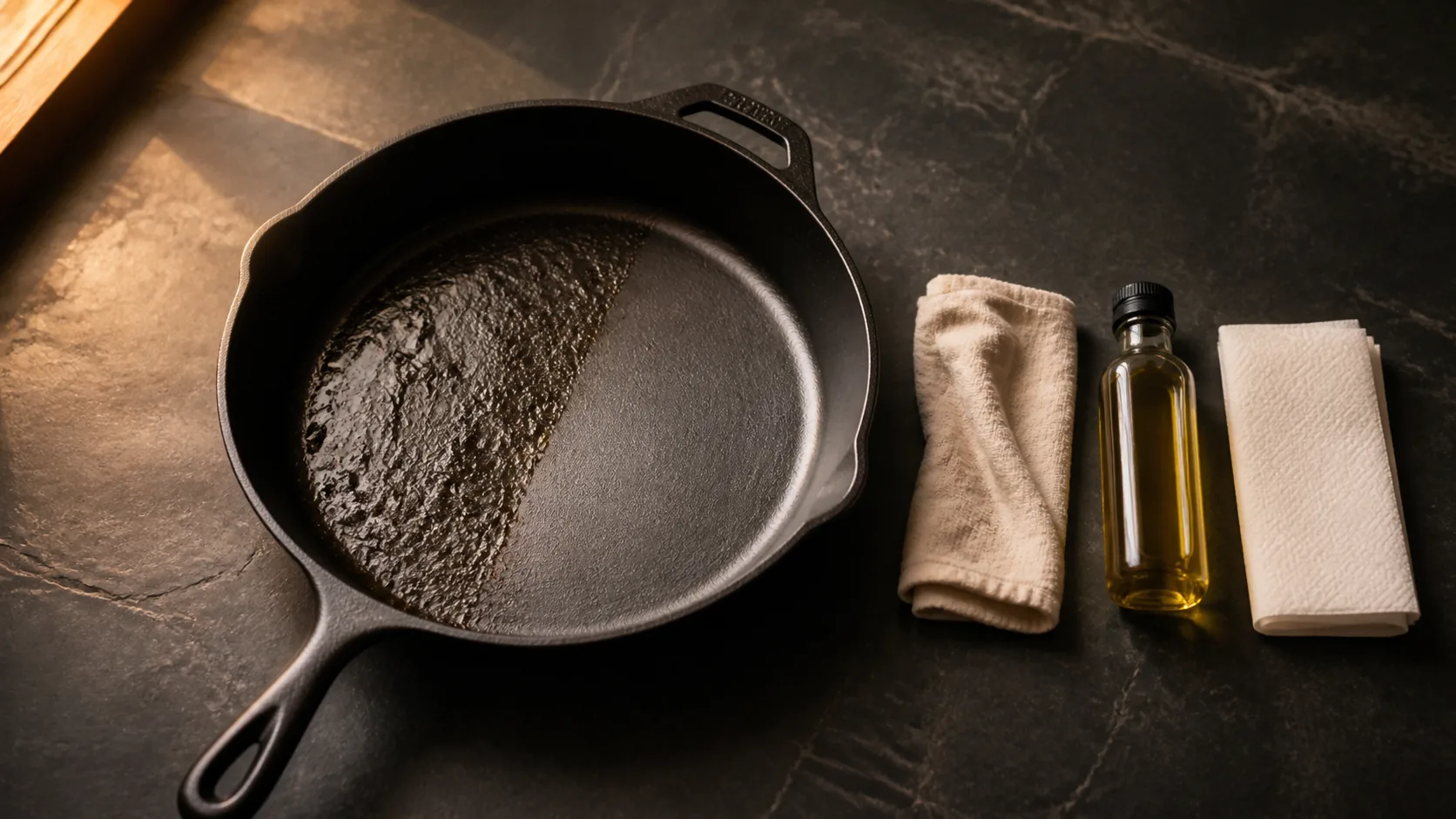
yellow condition
pitting-safety
Small pits or rust craters on the cooking surface
Applies to: Bare cast iron; pits visible after rust removal; no cracks
yellow
Possible causes (ranked)
- Rust that etched the surface before removal
- Repeated acid contact on bare metal
- Aggressive scrubbing that removed protective layers
Next step — change one variable
Change one variable: after cleaning rust, season the pan and cook with it. Shallow pits often fill with seasoning over repeated use. Do not sand or grind the surface unless you understand the impact on the pan’s structure.
Stop condition
Stop and do not use if you find a crack, a raised lip around a pit, or deep pitting that exposes metal thin enough to flex; obtain a professional assessment or retire the pan.
Method
Clean → season with thin coats → normal cooking to rebuild a smooth layer; monitor the pits over several uses.
Unknown fields
- Depth and extent of pitting (inspect carefully)
- Whether the pan has cracks (cracks are a separate, red condition)
- Manufacturer guidance specific to your pan model
Sources
Limited factual extraction with attribution; no reproduction of proprietary diagrams.
red condition
enameled-caution
Enameled cast iron: chipping, cracking, or seasoning confusion
Applies to: Enameled cast iron (e.g., Dutch oven); user wondering whether to oven-season or strip it
red
Possible causes (ranked)
- Confusing enameled cookware with bare cast iron
- Attempting to season or strip the enamel coating
- Thermal shock cracking the enamel
Next step — change one variable
Change one variable: do not oven-season or lye-strip enameled cookware. Follow the manufacturer’s care instructions for the enamel; clean with non-abrasive methods and inspect for chipping.
Stop condition
Stop using an enameled pan if the enamel chips, cracks, or exposes bare iron — glass chips can contaminate food and exposed iron will rust. Replace or seek professional guidance.
Method
Manufacturer care instructions only; never lye, oven self-clean, or metal scouring on enamel.
Unknown fields
- Exact enamel care instructions for your brand/model
- How the damage occurred
- Whether chipping is recent or pre-existing
Sources
Limited factual extraction with attribution; no reproduction of proprietary diagrams.